
Cecilia Tarruell
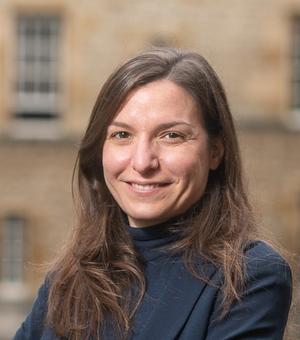
Cecilia Tarruell is a Research Associate Member of the UNSEEN project. She has been a Lecturer in History at Wadham College (2023-2025), a Lecturer in History at New College (2022-2023), the Sir John Elliott Junior Research Fellow in European History 1500–1800 at Oriel College (2018-2022), a Newton International Fellow at the History Faculty and Wolfson College (2016-2018) and a Max Weber Fellow at the European University Institute in Florence (2015-2016). She received a joint doctorate in Early Modern History from the École des Hautes Études en Sciences Sociales in Paris and the Universidad Autónoma de Madrid in 2015.
Cecilia’s area of expertise is the history of the Spanish Empire and its contacts with the Islamic world during the 16th and 17th centuries. Her research addresses questions concerning the phenomena of human mobility and migration, religious conversion, labour relations, gender, social inclusion and exclusion, and the mechanisms of accommodation and coexistence within societal contexts of persistent warfare and violence.
Since her time at Oxford, Cecilia has been working on her postdoctoral research project, which is the writing up of a monograph entitled Mobility and Religious Conversion in the Early Modern Iberian World: The Assimilation of Migrants from Islamic Lands. The book focuses on voluntary migration flows from Islam to Christendom through the case of the Spanish Empire. In particular, she studies the voluntary arrival of individuals from the Ottoman Empire, Safavid Persia and Morocco in the Iberian world during the late 16th and early 17th centuries. Such population flows involved cases of Muslims, but also Jews and Eastern Christians, who voluntarily decided to settle in the Spanish Empire, and generally converted to Catholicism as part of the process of migration and assimilation.
In parallel, over the past years Cecilia has been working on another monograph project entitled Circulations between Christian and Islamic Lands: Captivity and Enslavement of Subjects and Foreigners in the Service of the Spanish Empire (c.1574–1609). This book stems from her doctoral dissertation and focuses on forms of coerced mobility in the early modern Mediterranean. It analyses long-term Christian captivity and enslavement in the Ottoman Empire and Morocco by looking at individuals who, upon their return to Christian lands, served the Spanish Habsburgs during the late 16th and early 17th centuries.
Selected Publications
- ‘Prisoners of War, Captives, or Slaves? The Christian Prisoners of Tunis and La Goleta in 1574’, in C. G. De Vito and A. Gerritsen (eds.), Micro-Spatial Histories of Global Labour (London: Palgrave, 2018), pp. 95-122.
- ‘Entre Chrétienté et Islam: parcours des serviteurs des galères de la Monarchie hispanique (fin XVIe–début XVIIe siècles)’, Hespéris-Tamuda, 50 (2015), pp. 43-65.
- ‘Circulations entre Chrétienté et Islam: quelques réflexions à propos des “méritos y servicios” au service de la Monarchie hispanique (XVIe–XVIIe siècle)’, Diasporas, 25 (2015), pp. 45-57.
- ‘Peticionarios de mercedes provenientes de tierras del Islam en la Corte de Madrid (finales s. XVI–inicios s. XVII)’, in R. Franch Benavent, F. Andrés Robres and R. Benítez Sánchez-Blanco (eds.), Cambios y resistencias sociales en la Edad Moderna. Un análisis comparativo entre el centro y la periferia mediterránea de la Monarquía Hispánica (Madrid: Sílex, 2014), pp. 263-271.
- ‘Servir tras un largo cautiverio: trayectorias de los soldados cautivados en defensa de la Monarquía (1574–1609)’, in M. Martínez Alcalde and J. J. Ruiz Ibáñez (eds.), Felipe II y Almazarrón: La construcción local de un Imperio global (Murcia: Editum, 2014), vol. 1, pp. 293-310.
- ‘La captivité chrétienne de longue durée en Méditerranée (fin XVIe–début XVIIe siècle)’, Cahiers de la Méditerranée, 87 (2013), pp. 91-103.
- ‘Memorias de cautivos, 1574-1609’, in O. Jané, E. Miralles and I. Fernández (eds.), Memòria Personal. Una altra manera de llegir la història (Barcelona: Bellaterra, 2013), pp. 83-97.
- ‘Presencia y permanencia de población musulmano-conversa tras las expulsiones: los conversos de origen berberisco u otomano’, in Actas del XII Simposio Internacional de Mudejarismo (Teruel: Centro de Estudios Mudéjares, 2013), pp. 545-554.
- ‘Orán y don Carlos de África, un caballero de Santiago atípico’, in M. A. de Bunes Ibarra and B. Alonso Acero (eds.), Orán: Historia de la corte chica (Madrid: Polifemo-IULCE, 2011), pp. 263-288.

